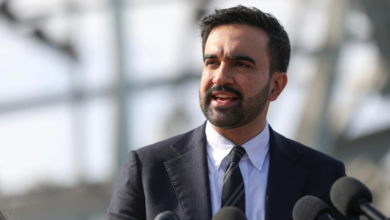
Trump says Pakistan is testing nukes. Here’s what its arsenal looks like
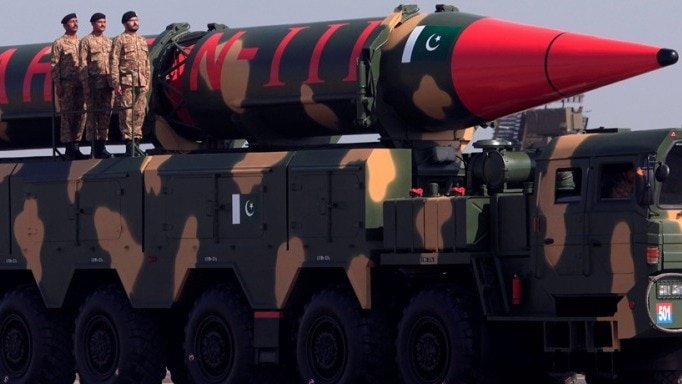
Trump says Pakistan is testing nukes. Here’s what its arsenal looks like
US President Donald Trump on November 3, 2025 said Pakistan was conducting nuclear tests covertly, a claim he used to justify broader changes in US nuclear policy. The allegation, if confirmed, would heighten international concerns about proliferation in South Asia. India, which has repeatedly raised concerns about Pakistan’s record as a nuclear-armed state at global forums, dismissed what it called “nuclear brinkmanship” and reaffirmed its no first use policy following Operation Sindoor.
Officials said Operation Sindoor, launched after the Pahalgam terror attack, inflicted “heavy damage” on Pakistani air bases. India has maintained that while it adheres to its stated doctrine of no first use, it “will not give in to nuclear blackmail” and will take all necessary steps to protect national security.
Below is a concise summary of Pakistan’s reported nuclear forces and a reality check on capability and limits, drawn from open-source assessments.
PAKISTAN’S REPORTED NUCLEAR FORCES
Open-source analysts estimate Pakistan’s total warhead inventory at roughly 170 warheads, a figure consistent with recent assessments. These estimates are necessarily approximate and come with significant caveats about operational status and reserves.
Air-delivered
- Mirage III/V — launchers ~36; deployed since the late 1990s; can carry a nuclear bomb or air-launched cruise missile (Ra’ad variants).
- JF-17 — images and limited reporting suggest testing with cruise missiles, but a confirmed, dedicated nuclear delivery role remains uncertain.
- Subtotal (air-delivered, per open estimates): ~36 warheads (assignment estimates vary).
Land-based
- Open sources list multiple ballistic and cruise systems assigned to Pakistan’s strategic forces, including:
- Abdali (Hatf-2) — short range (~200 km).
- Ghaznavi (Hatf-3) — short range (~300 km).
- Shaheen-1/1A (Hatf-4) — medium range (hundreds of km).
- Shaheen-II — ~2,000 km range.
- Shaheen-III — reported range about 2,750 km and is Pakistan’s longest-range deployed missile, giving regional reach but not intercontinental reach.
- Ghauri (Hatf-5) — ~1,250 km range.
- Nasr (Hatf-9) — a short-range tactical ballistic missile (reported range ~60–70 km) intended for battlefield nuclear use.
- Missile Threat
- Ababeel (Hatf-8) and Babur variants (GLCM) are also listed in open-source inventories.
- Estimated subtotal (land-based assigned warheads in the supplied material): ~126 (assignment conventions differ across sources).
Sea-based
Babur-3 SLCM — submarine-launched cruise missile first tested in 2017; open estimates give it a range of roughly 450 km and list only a very small number of submarine-launched cruise missiles as operational, a limited sea-based second-strike capability compared with larger SSBN fleets.
CAPABILITY AND LIMITATIONS
Pakistan’s arsenal remains regional in scope, with its longest-range missile, Shaheen-III, reaching about 2,750 km — sufficient to target regional adversaries but not intercontinental ranges. Its focus remains on short-range and tactical systems, notably the Nasr missile, reflecting a strategy of flexible response and battlefield deterrence.
The air-based leg relies mainly on ageing Mirage aircraft, with the JF-17 yet to be confirmed as nuclear-capable. Its sea-based deterrent, centered on the Babur-3 cruise missile, remains limited in both range and deployment scale.
While Pakistan is estimated to possess around 170 warheads, not all are operationally deployed at any time. Several systems are dual-capable, and some rely on older liquid-fuel technology, making rapid launch difficult. Analysts have long noted the vulnerability of fixed sites and liquid-fuel assets to counterforce strikes, a vulnerability highlighted by the reported effects of Operation Sindoor.
REGIONAL SECURITY OUTLOOK
Pakistan’s expanding arsenal and ambiguous nuclear doctrine continue to fuel concerns in South Asia. India, while reaffirming its no first use policy, has stressed that its forces will respond decisively to any provocation. The balance, analysts say, remains fragile — shaped by tactical posturing, cross-border militancy, and the risks inherent in two nuclear powers operating under sustained tension.
– Ends
Tune In
Source link